ISRO Conducts National Meet on 'Scientific Exploration of the Moon through Chandrayaan
Missions'
Home
/ ISRO Conducts National Meet on 'Scientific Exploration of the Moon through Chandrayaan
Missions'
September 29, 2026
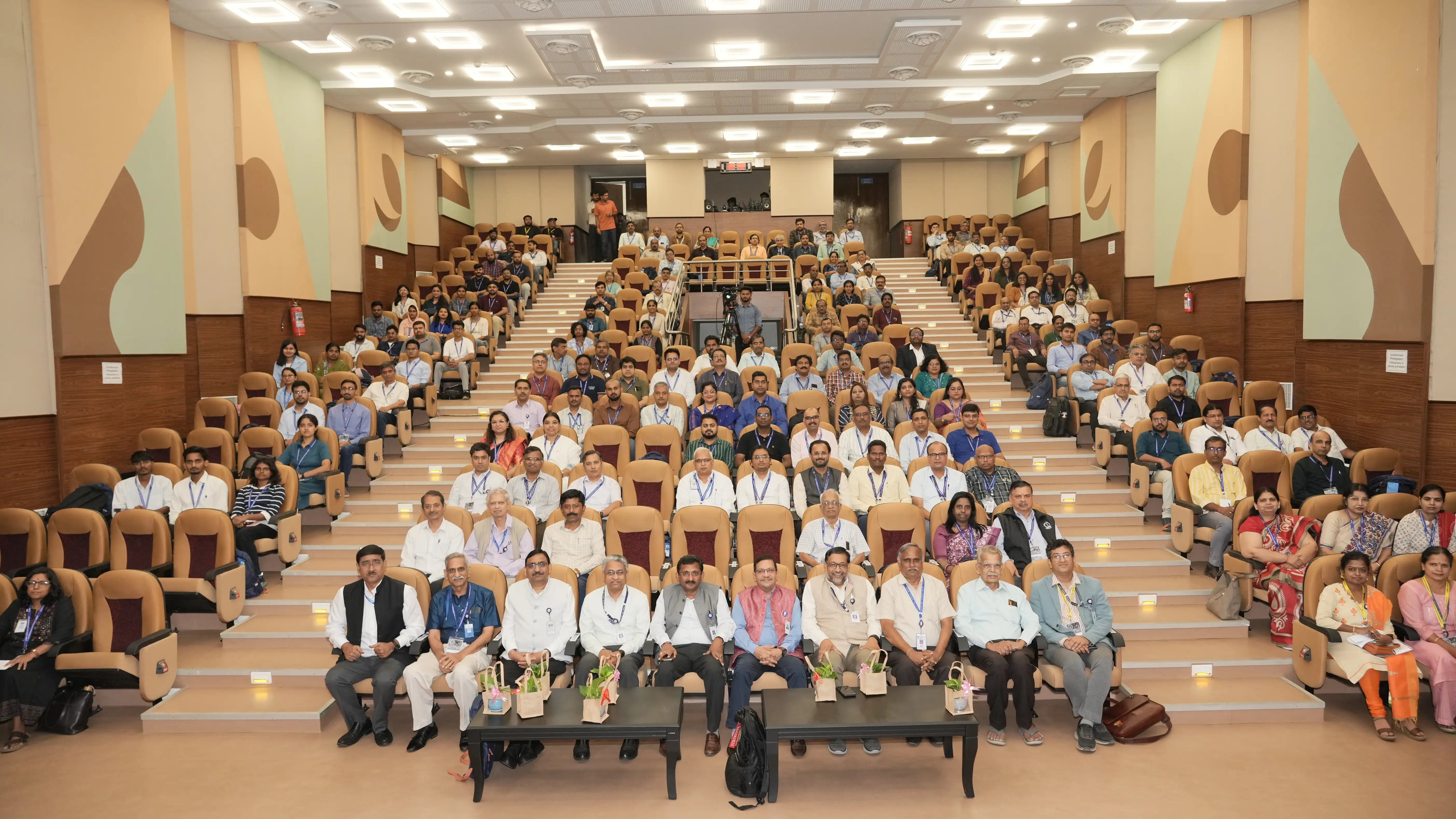
The gathering in LEOS, ISRO, Bengaluru during the Chandrayaan National Meet, comprising academicians, faculty members, researchers, apart from the veterans and serving scientists from ISRO/DOS centres. The gathering represented multi-disciplinary domains of expertise ranging from planetary science, astrobiology, computer science, several engineering branches, architecture, and many more.
On September 28, 2026, ISRO began a three-day national meet(September 28-30, 2026) on the theme ‘Scientific Exploration of the Moon through Chandrayaan Missions’ at the Laboratory for Electro Optics Systems (LEOS), ISRO, Bengaluru. The meeting brought together about 150 registered participants, including 75 participants from the Indian academia and research institutes, representing more than 45 academic and research institutions. The list included 36 students actively pursuing lunar research at several academic institutes across the country.
Shri M Ganesh Pillai, Scientific Secretary, ISRO, inaugurated the national meet. During his welcome address at the inauguration session on September 28, 2026, Shri R. Venkateswaran, Director, LEOS, said the ultimate measure of India’s space program's success lies in the spread and depth of scientific discoveries. While setting the context of the national meet, Dr. Tirtha Pratim Das, Director, Science Programme Office, ISRO Headquarters, underscored the imperative of taking timely action to actively engage the student community in the process of building the future of the country’s space exploration programme, as well as to synergise the national capabilities, towards the materialisation of the Space Vision 2040. Prof. Anil Bhardwaj, Director of the Physical Research Laboratory (PRL), recapitulated the world-class scientific contributions of the Chandrayaan-1, 2 and 3 missions, the ingenuity of the upcoming Chandrayaan-4 and 5 missions, and the opportunities ahead. Shri M. Ganesh Pillai, Scientific Secretary, ISRO, during his inaugural address, mentioned the global impact made by the Chandrayaan series of missions, including imaging of the Moon with the highest resolution using the Orbiter High Resolution Camera (OHRC) onboard Chandrayaan-2, the first-ever successful soft-landing of Chandrayaan-3 in the higher lunar latitudes, to name a few. He emphasised the role of academic and research institutes in facilitating India’s lunar exploration journey and making the country a major contributor to global space exploration.
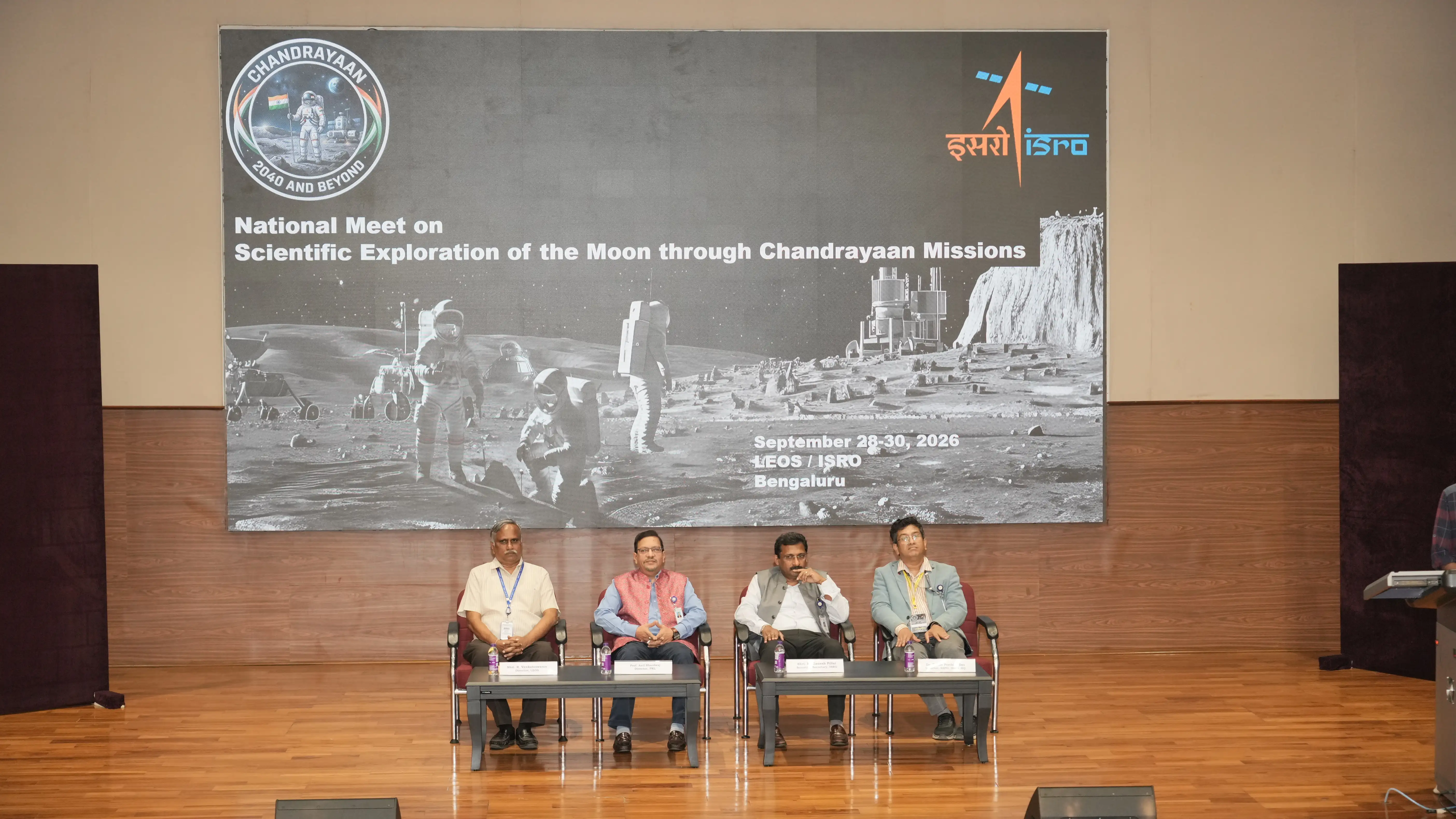
During the inaugural session on the Chandrayaan National Meet on September 28, 2026. From the left: Shri R. Venkateswaran, Director, LEOS; Prof. Anil Bhardwaj, Director, PRL; Shri M Ganesh Pillai, Scientific Secretary, ISRO, and Dr. Tirtha Pratim Das, Director, Science Programme Office, ISRO Headquarters
During the first day of the event, during a special session in the afternoon, Shri A S Kiran Kumar, former Chairman, ISRO / Secretary, DOS, member Space Commission, spoke about the lunar exploration pathway of the country, and the importance of identifying the scientific opportunities well in advance, to utilise even the preparatory stage missions towards the human landing on the Moon by India, slated for the year 2040.
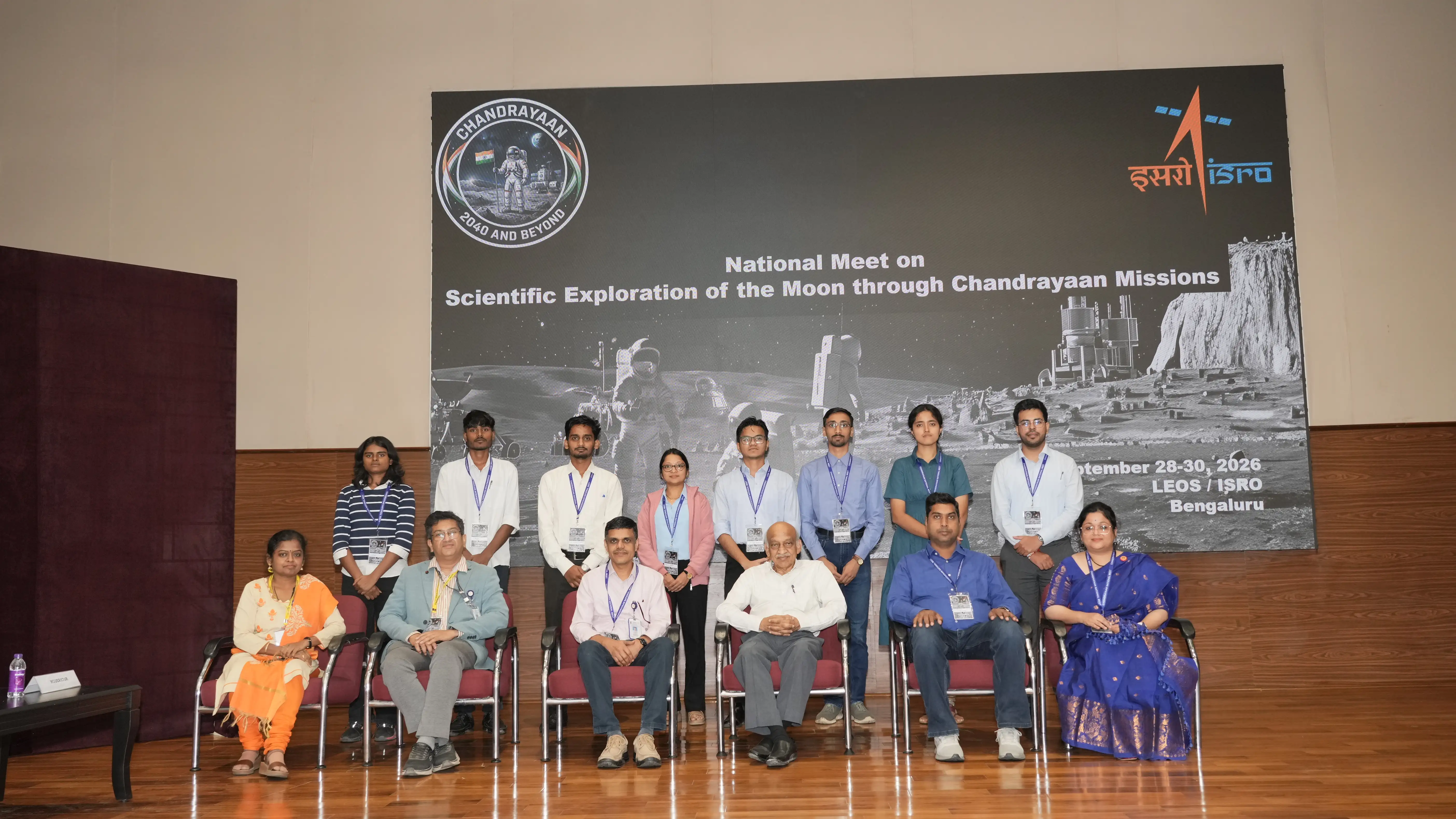
Winner students (standing) of an all-India hackathon on lunar architecture for scientific bases and habitats, along with Shri A S Kiran Kumar, former Secretary, DOS / Chairman, ISRO, member Space Commission, Chairman, Apex Science Board, ISRO, as well as their mentors from academia and ISRO.
The three-days long national meet includes, in its detailed agenda, recollection of the scientific contributions from Chandrayaan-1,2 and 3; lessons learnt from the mission planning and execution; plans for Chandrayaan-4 (India’s first lunar sample return mission) and Chandrayaan-5/ LuPEX (India’s collaborative lunar mission with the Japanese space agency JAXA to explore the lunar volatiles including water-ice in the vicinity of a Permanently Shadowed Region in the South polar zone of the Moon); a brainstorming session with the national academia and research institutes, as well as a special session to interact with the students on novel ideas.